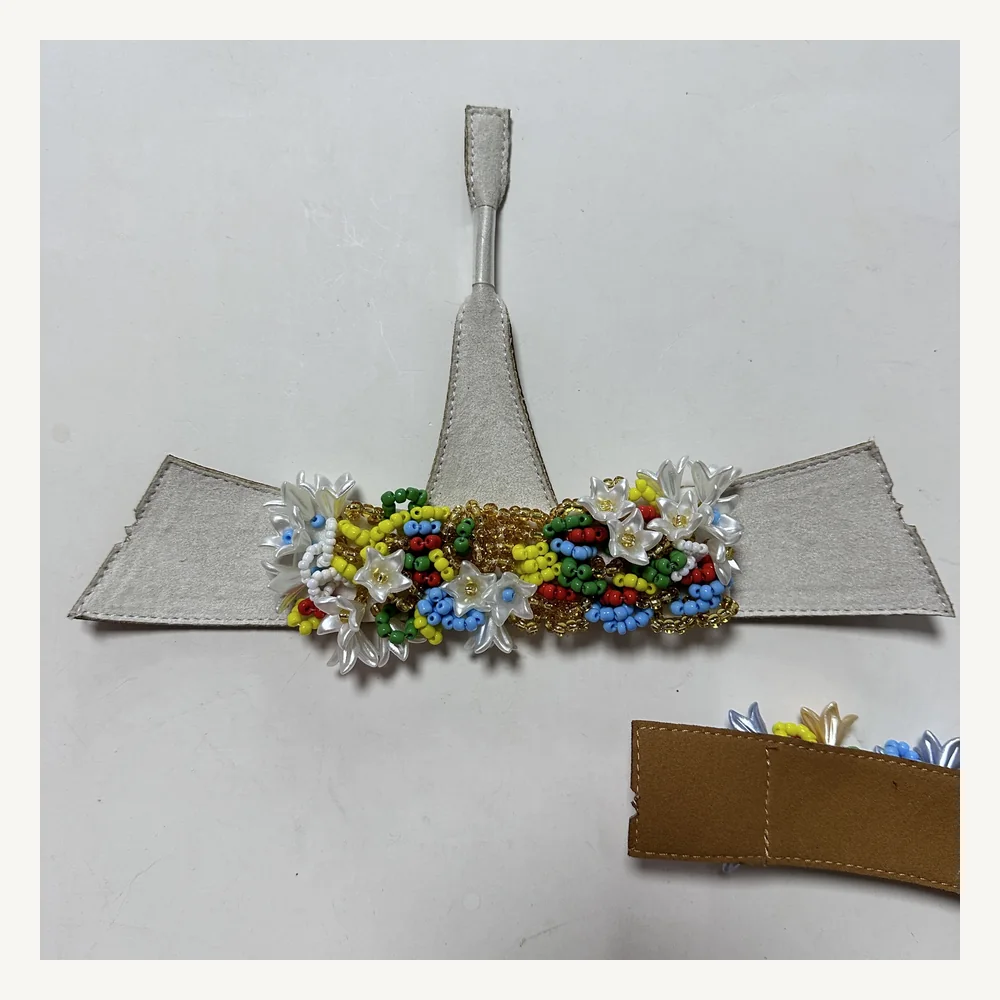
Beads add texture and colour, but they also add weight and create small points of contact. The right approval question is not simply, “Do the beads match the drawing?” It is, “Will this decoration remain comfortable and secure on the intended upper construction?” Ask for one complete, representative sample rather than approving decoration on a loose strip alone.
Check the approved layout against the reference
Place the sample beside the marked artwork or reference photo. Compare the overall width, spacing, colour mix and direction of the beads. For a pair, look at the left and right upper together. Hand-placed decoration may have natural variation, but the two sides should read as a pair. Identify which details are essential and which variation is acceptable before production starts.
Look closely at how the beads are attached
Turn the component over. Are threads secured neatly? Are knots, sharp ends or adhesive visible where they might touch the foot? Gently handle the decorated area and inspect for loose beads or gaps. This is a practical screening check, not a substitute for an agreed durability test. If the upper will be exposed to repeated flexing, ask the supplier how the attachment method was assessed on the actual base material.
Confirm backing, edges and comfort
Beadwork often needs a backing or support layer. That layer should hold the decoration without making the upper unnecessarily stiff. Run a finger along the reverse side and edges. Watch for exposed thread, rough trim, bulky folds or hard spots at the instep. A soft-looking sample can feel very different after it is bent around the foot, so check the intended curvature rather than judging it only while flat.
Leave room for shoe assembly
Mark the stitching, folding, lasting and strap-attachment areas. Beads placed too close to these zones may obstruct a seam or receive pressure during assembly. Confirm the undecorated allowance with the shoe factory before approving the decorative layout. If the sandal includes a buckle or adjustable strap, check whether that adjustment changes where the beaded area sits on different feet.
Review the sample on a trial shoe
Whenever possible, mount the upper on the intended last and sole construction. Check whether the decoration sits centred, whether the pair remains balanced and whether the beads rub against adjacent straps. A flat component cannot reveal every fit issue. A trial shoe also helps you judge how the design photographs from the front and side, not just from directly above.
Record the approval standard
- Approved bead size, colour range and arrangement, with a clear pair reference
- Base material, backing, edge finish and overall dimensions
- Attachment method and agreed checks for loose beads
- Minimum clearance around seams, folds and hardware
- Acceptable handwork variation and any rejected defects
- Photos of the approved component and, ideally, the trial shoe
If a change is made after approval—such as switching the backing, bead source or strap width—review a revised sample. Those details can affect both appearance and wear. Explore the beaded samples in our product gallery or see our sandal upper products; then use the contact section to discuss your design.
Developing a beaded upper?
Send Elaine a reference image, approximate dimensions, preferred base material, bead colours and estimated quantity. If you have a shoe last or assembly drawing, include it so we can discuss the placement and sampling details.
Email: elaine@duomeint.com
Phone: +86 159 1584 9874
Send a WhatsApp enquiry