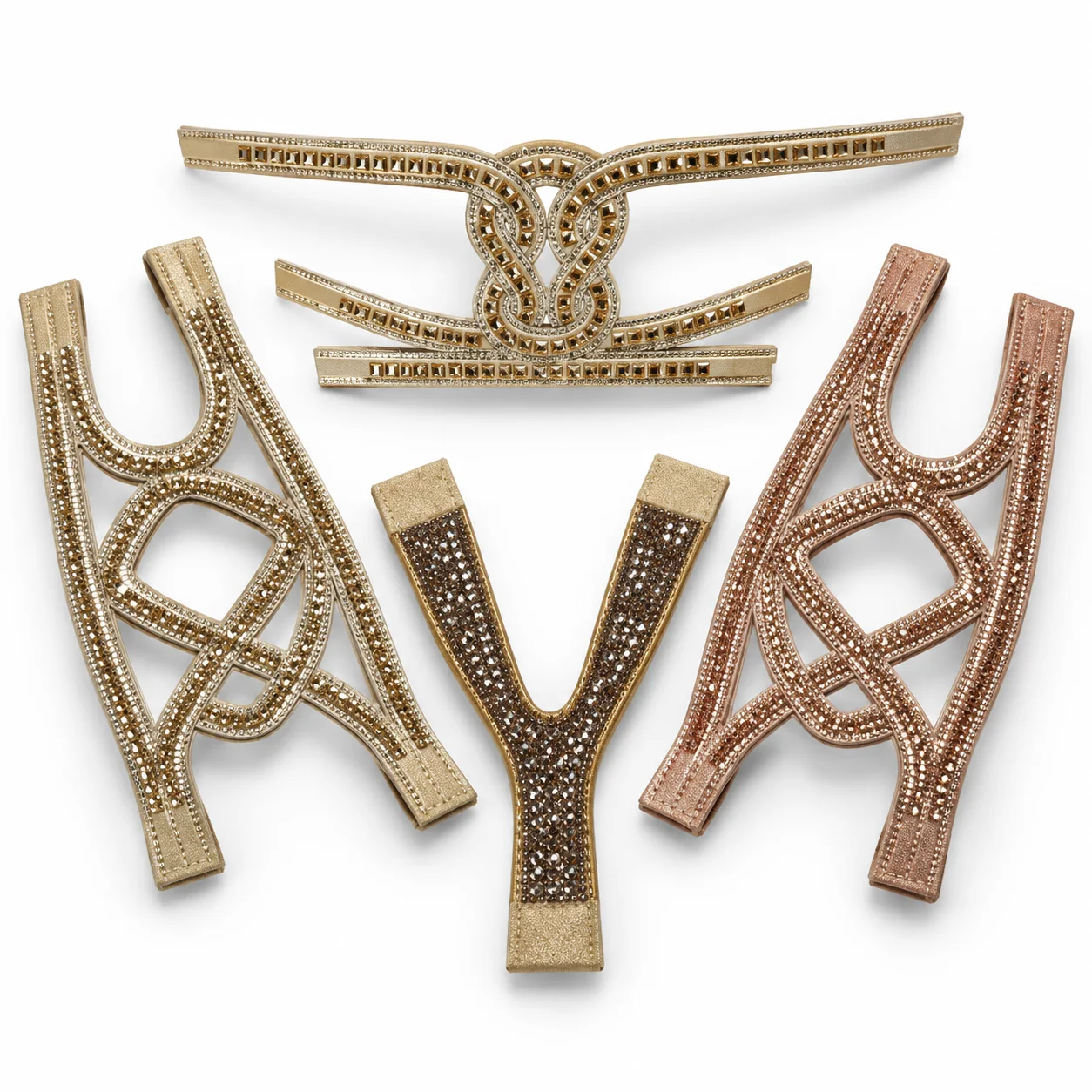
Rhinestone panels, beaded straps and flower decorations create different packing problems. A flat PU strap may tolerate stacking, while a raised ornament can leave a mark on the component underneath. The useful question is not “Is each pair bagged?” It is “What can touch, bend or press against this upper during the journey?” Start with the actual approved sample and review the pack before shipment.
Identify the vulnerable points
Lay out one pair and look for exposed stones, metal edges, loose decorative ends and areas that must retain a curve. Check the underside too: a rough backing or protruding fastener may scratch the next piece. Ask the supplier to show the proposed orientation inside a pack. For mixed designs, do not assume the same packing method suits every style.
Take photographs of these points and attach them to the packing instructions. A picture showing where a separator belongs is easier to follow than a general request for “good protection.”
Separate decorated surfaces
A bag helps keep components together, but it does not necessarily stop pressure or abrasion. Where decorated faces would rub, discuss a soft, clean separator or individual wrapping that suits the material. Avoid placing a hard ornament directly against a visible PU face. Test the chosen wrapping on a sample: it should not shed fibres, transfer colour or cling to the surface.
Keep adhesive tape away from the upper itself. Tape on an outer wrapper is different from tape touching rhinestones, embroidery or a finished strap. If a protective film is proposed, confirm its compatibility and removal method before approving it.
Preserve shape without overpacking
Do not fold a strap across a decorated area simply to reduce carton size. Agree which parts may bend and which should remain flat or supported. Raised flowers and loop constructions may need space around them rather than tighter bundles. On the other hand, an oversized carton with moving contents also creates risk. The aim is a stable pack with protection at the contact points.
Ask for the packed dimensions, quantity per inner pack and approximate carton weight. Review freight cost and protection together. A slightly different pack size may be worth discussing if it prevents re-sorting or damaged components at the shoe factory.
Keep pairs and variants traceable
State whether the order quantity means pieces, pairs or sets. Keep left and right components matched and make the orientation clear, especially on styles that look similar at first glance. Separate sizes, colours and material variants rather than leaving the receiving team to identify them by appearance.
- Use the buyer's style code and agreed colour name on each inner pack.
- Show size, quantity and whether the count is in pieces or pairs.
- Include a batch reference where traceability is required.
- Agree carton numbering and the packing-list format before dispatch.
Review one finished pack before bulk packing
Request photos of an opened inner pack, its separators and the completed carton. For a new or delicate construction, consider having a packed sample sent to the receiving factory for review. Open it as the production team would: check surface condition, shape, pair matching and the time needed to unpack it.
A short sample journey is not proof that every shipping route is safe. If your programme requires transport testing, define the method and acceptance criteria with the supplier or testing provider. Do not substitute an informal shake of the carton for an agreed test.
Check condition before sealing
Packing should not hide an unresolved finishing problem. Confirm that components are ready for packing under the agreed production process, and check for visible marks, loose decorations and trapped debris. Store and handle them in a clean, dry area. Where moisture protection is needed, choose it according to the product and shipping conditions rather than adding an unspecified treatment.
Record the approved packing arrangement alongside the product sample. If decoration height, material finish or order assortment changes, review the pack again. Explore our sandal upper capabilities and sample gallery, or contact DUOME to discuss a specific component.
Planning a decorated sandal upper order?
Send Elaine your reference images, dimensions, material, colours and estimated quantity. Include your receiving factory's packing requirements and delivery destination so we can discuss the product and proposed packing together.
Email: elaine@duomeint.com
Phone: +86 159 1584 9874
Send a WhatsApp enquiry