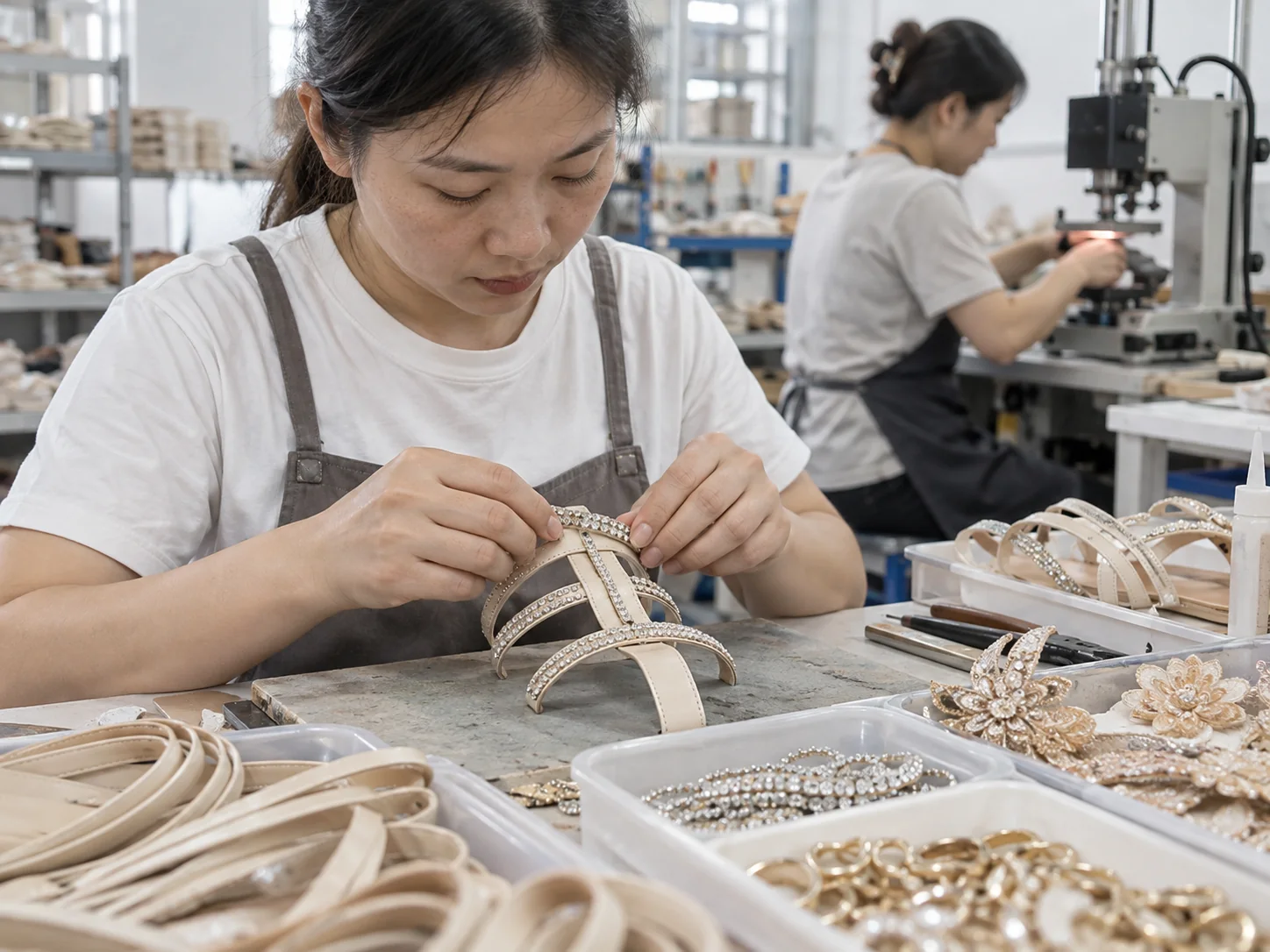
Custom sandal uppers often combine PU, textile, stones, stitching and hand assembly. The supplier should be able to explain how those details will be translated from a reference image into a repeatable component. Asking the same practical questions of each candidate makes comparisons much clearer.
1. Which parts of this design can you make in-house?
Ask who handles cutting, braiding, stitching, heat-press decoration, hand stone work and final inspection. Outside processing is common in footwear supply chains, but you should understand which operations the supplier directly controls and how subcontracted work is checked.
2. What information do you need for the first sample?
A good answer should cover more than a photograph. Expect questions about dimensions, attachment points, base material, colour, decoration and estimated quantity. The supplier should also identify any missing information that could change the construction or quotation.
3. How will material and colour be approved?
Ask whether approval will use stock swatches, a buyer's physical sample, Pantone direction or a custom material. Clarify how metallic and glossy surfaces are compared, since photographs can shift their appearance. Keep one approved reference for future production checks.
4. Which measurements and tolerances matter?
Overall dimensions are only a starting point. Discuss strap width, crossing points, stone placement and connection allowances. For flexible or braided components, agree whether measurements are taken relaxed or under tension. The supplier should be able to record the critical points on a drawing or approved sample.
5. What does sample approval include?
Confirm whether revisions are expected and which changes may affect price or lead time. Approval should cover material, colour, construction, dimensions and decoration—not only the front appearance. Ask how the approved sample and comments are transferred to the production team.
6. How is production quality checked?
Relevant checks may include dimensions, symmetry, adhesion, stitch quality, edge finishing and packing. The exact inspection points should match the design. A rhinestone upper and a plain PU strap do not need identical control methods, so look for an answer connected to your product.
7. Who will communicate with you during development?
Consistent communication prevents small questions from becoming production problems. Ask who receives drawings, confirms revisions and follows the order. It is useful to know whether you can speak with one contact who understands the history of the project from enquiry through delivery.
Information to prepare before contacting suppliers
- A clear reference image, sketch or physical sample
- Approximate upper dimensions and attachment points
- Preferred material, colour and decoration
- Target sample date and expected order quantity
- Any critical quality or packing requirements
Review our sandal upper manufacturing capabilities, then use the contact section to send your sourcing brief to Elaine.
Comparing sandal upper suppliers?
Send Elaine your reference image, dimensions, material, colour and estimated quantity. She will reply with the practical questions needed to review sampling and quotation.
Email: elaine@duomeint.com
Phone / WhatsApp: +86 159 1584 9874